
How to set up an Arabic and English menu (and more for tourists)
A hands-on guide to bilingual and multilingual menus in Egypt: Arabic RTL checks, dish-name transliteration, AI plus human translation, and tourist languages for Red Sea venues.
Menyo Team
July 7, 2026
Picture a Friday evening at a seafood restaurant in Hurghada: an Egyptian family at one table, a Russian couple at the next, a group of Italian divers by the window, and a Saudi family who just arrived. One printed menu in English with a few Arabic headings serves none of them well. The Egyptian family reads English dish names that nobody uses, the Russian couple guesses, and your waiter spends the night translating.
This is a hands-on setup guide, not an argument for why multilingual menus matter (that case is made in why your menu needs to speak your customers' language). It covers choosing your languages, getting Arabic right-to-left layout correct, naming Egyptian dishes for foreigners, when AI translation is enough and when a human must check, handling tourist languages in the Red Sea and Sinai, and making prices clear to visitors.
1Choose languages from who actually sits down
Do not pick languages from a list of "tourist languages". Count your own guests. For one ordinary week, ask the floor staff to tally the language each table used when ordering. Then use a rule like this:
| Venue type | Typical starting set | Add another language when |
|---|---|---|
| Neighbourhood restaurant or café in Cairo, Alexandria, Delta cities | Arabic and English | Rarely needed |
| Downtown, Zamalek, Giza pyramids area, Luxor, Aswan | Arabic and English, English-first layout | A single language group shows up at a meaningful share of tables every week |
| Hurghada, Sharm El Sheikh, Marsa Alam, Dahab | English, Arabic, plus your largest visitor group | Your tally shows a second large group, or a hotel partner sends you a specific market |
| Sahel and North Coast | Arabic-first with English | Rarely needed; most guests read Arabic |
The tally matters because visitor mix differs between towns, resorts and seasons. A Red Sea venue might see mostly Russian-speaking guests in one season and Europeans from several countries in another. Three well-maintained languages beat six neglected ones.
2Getting the Arabic side right
Arabic reads right to left, and a menu built in English and then "flipped" often breaks in small ways that make it look careless. Check these on a real phone, not only on the laptop:
- Direction: the whole layout (category list, item names, prices) flows right to left, with prices aligned on the left side of the line.
- Mixed text: names that combine Arabic and Latin text ("بيتزا 4 Cheese") can reorder oddly. Write them fully in Arabic where possible, or test how each one displays.
- Digits: decide between Western digits (1, 2, 3) and Eastern Arabic digits (١، ٢، ٣) and use one consistently. Western digits are readable by every guest, which helps in tourist areas.
- Currency: write "ج.م" or "جنيه" on the Arabic side and "EGP" on the English side, and keep the number identical in both.
- Language register: write descriptions in clear Modern Standard Arabic, which Egyptian and Gulf guests both read comfortably, while keeping familiar Egyptian dish names as people say them.
- Font: use a proper Arabic typeface; a Latin font's fallback Arabic glyphs often look thin and hard to read at small sizes.
3Naming Egyptian dishes for foreign guests
Translating a dish name literally rarely helps. "Jew's mallow" does not sell molokhia to anyone. The approach that works: keep the original name, transliterated, and add a short plain explanation.
| Arabic | English menu name | Explanation line |
|---|---|---|
| كشري | Koshari | Rice, lentils and pasta with spiced tomato sauce and crispy onions. Vegetarian. |
| ملوخية | Molokhia | Green leaf stew with garlic and coriander, served with rice and chicken. |
| طعمية | Ta'meya | Egyptian falafel made from fava beans and herbs. |
| حواوشي | Hawawshi | Baladi bread stuffed with spiced minced beef, baked until crisp. |
| محشي | Mahshi | Vegetables and vine leaves stuffed with herbed rice. |
| أم علي | Om Ali | Warm pastry pudding with milk, nuts and raisins. |
Pick one spelling for each transliterated name (koshari or kushari, not both) and use it everywhere: menu, signage, Instagram. For the description line itself, the formula in our menu description guide applies in every language.
4AI translation versus human translation
This is less of a choice than it looks. For most menus the sensible workflow uses both: AI for speed, a human for the parts where mistakes are costly.
| AI translation | Human translator | |
|---|---|---|
| Speed | Minutes for a whole menu | Days, depending on availability |
| Cost | Low or included in your menu tool | Paid per word or per menu, every time you change it |
| Strength | Consistent, instant updates when items change | Nuance, cultural fit, catching ambiguity |
| Typical failure | Literal dish-name translations, wrong culinary terms | Out of date after the next menu change |
A workable routine: finalise the Arabic and English master menu first, run the AI translation, then give a native speaker of each language 20 to 30 minutes with the result. Ask them to check dish names, allergen words, anything humorous or clever in your descriptions, and that no price or portion has changed. A hotel guest-relations colleague, a tour guide or a regular guest is often happy to help.
In Menyo, multi-language menus are part of the Professional plan (up to three languages; Enterprise removes the limit). The built-in AI translation currently covers Arabic, Italian, Spanish and Russian, keeps brand names intact and uses native culinary terms, and you can edit any line afterwards. If you need a language outside that list, check the current options in your dashboard before planning around it.
5Language switching: automatic detection plus a visible choice
A good digital menu opens in the guest's phone language automatically, and also shows an obvious switcher. You need both: plenty of travellers keep their phone in English, and some Arabic speakers prefer reading menus in English.
- Label languages in their own script ("العربية", "English", "Русский", "Italiano"), not with flags. Flags map badly to languages; Arabic is spoken in many countries and English is not only British.
- Put the switcher at the top of the menu, where a confused guest looks first.
- Remember the choice so the guest does not switch again on every page.
Menyo's public menu detects the browser language, shows an in-menu language switcher and remembers the guest's choice.
Pro Tip
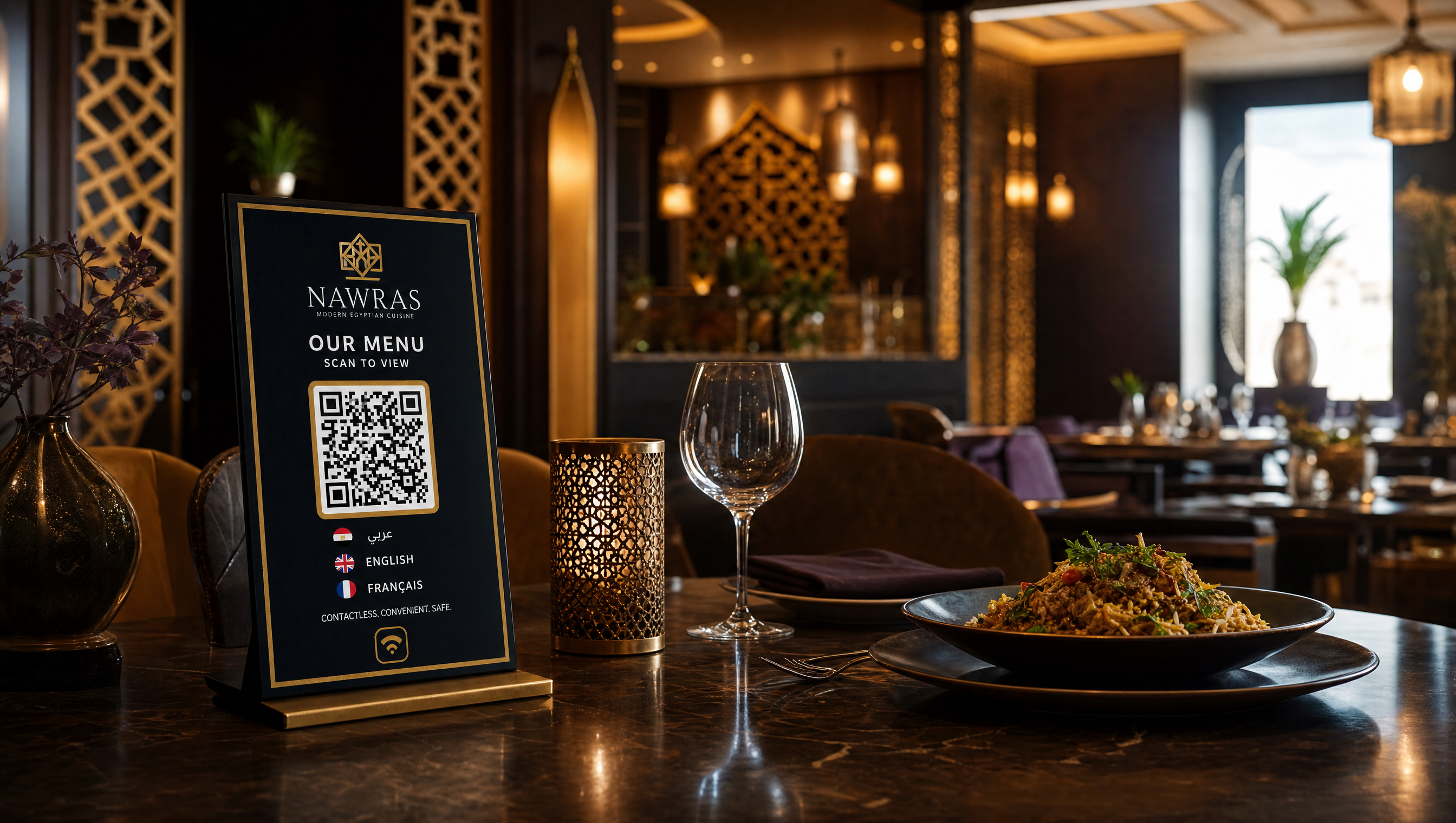
Print the available languages on the QR table card itself: "Menu in English · العربية · Русский". Guests who see their own language are more likely to scan instead of asking for paper. Where to put the cards is covered in our QR placement guide.
6Prices, taxes and service charge for visitors
With visitors, friction often comes from the bill rather than the food: additions they did not expect, or a price per kilo they misread. Prevent that on the menu:
- State clearly whether prices include VAT (14% in Egypt) and service charge. One line at the top of every language version is enough.
- Keep prices in EGP only. Showing euro or dollar conversions invites disputes when exchange rates move, unless you update them daily and accept that currency at that rate.
- Say which payment methods you accept (cash, cards, and whether foreign cards work) so guests are not caught out at the end.
- Make portion sizes explicit for sharing plates and seafood sold by weight, which are easy to misunderstand.
Translating the menu but not the extras
→ Service charge notes, allergen notes, "sold by weight" and the Wi-Fi password card are often left in English only. Translate every line a guest might need, not just the dishes.
Hotel restaurants with an international mix have extra considerations (room charging, all-inclusive exclusions); see our guide for hotels and resorts.
7Frequently asked questions
Which languages should a restaurant in Sharm El Sheikh or Hurghada offer?
English and Arabic, plus the language of your largest visitor group this season. Tally the languages your tables actually use for a week before deciding, because the mix varies by resort area and time of year.
Is AI translation good enough for a restaurant menu?
For the bulk of the text, usually yes, provided a native speaker reviews dish names, allergen terms and anything that relies on wordplay. The review takes far less time than translating from scratch.
Should Egyptian dish names be translated into English?
Keep the Egyptian name, transliterated consistently, and add a short explanation. Literal translations confuse guests more than the original name does.
Should the menu open in Arabic or English by default?
Let it follow the guest's phone language, with a clear switcher. If you must choose one default, pick the language most of your actual guests read.
8Set it up in this order
Finalise the Arabic and English master menu first, since every other language copies its mistakes. Fix right-to-left layout and dish-name spellings, add tourist languages based on your own tally, have a native speaker review each one, and print the available languages on your table cards. When you change a dish, change it in every language the same day.
If you want AI translation, automatic language detection and a switcher on your QR menu, the Professional plan includes them; you can create your Menyo account and compare plans on the pricing page.
Ready to digitize your menu?
Create a beautiful QR menu from a photo in minutes—the AI scan takes about 60 seconds. AI extracts items and prices automatically.
Try Menyo Free