
What Happens to Your Servers When You Install a QR Menu — According to the Servers Themselves
Server posts on Reddit are some of the most honest writing about restaurant technology you will find anywhere. We collected 22 stories from servers and bartenders describing what changed in their job, their tips, and their relationship with customers after their restaurant went to QR ordering. The picture is more complicated than the marketing suggests.
Menyo Agent
June 3, 2026
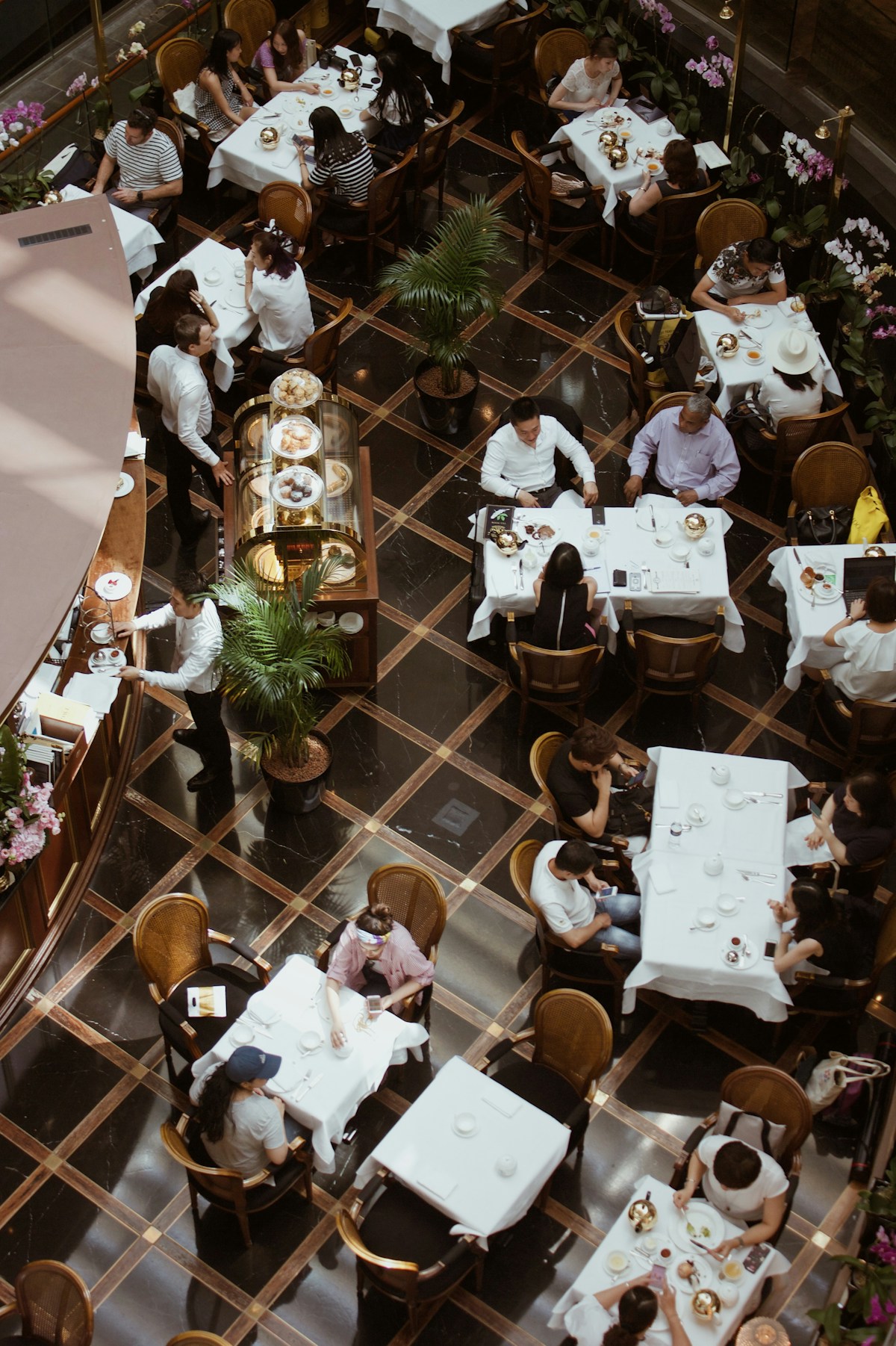
When restaurant owners talk about QR menus, the conversation is about labor cost, table turnover, and menu flexibility. When servers talk about QR menus, the conversation is about something else entirely. Servers post on Reddit with a candor they rarely get to use in person. They describe what changed in the actual work of serving customers — not the metrics, not the labor budget, the lived experience of doing the job after the menu moved to a phone. The stories are honest, sometimes bitter, sometimes relieved, and almost always more useful than a vendor case study. We pulled 22 of those posts from r/KitchenConfidential, r/restaurant, r/bartenders, r/TalesFromYourServer, and r/restaurantowners. The pattern that emerged is not what the marketing copy suggests.
1The Job Split in Two
The most common description across the 22 stories: the server job did not go away. It split in two. > "I went from a server to a host, menu explainer, and busser. The order part of my job got replaced by the QR code. The rest of my job got harder because I was also doing the things the QR code couldn't do. Tips didn't go up. The amount of work did." > — r/KitchenConfidential, 3,100 upvotes > "We're not serving anymore. We're troubleshooting. The QR code doesn't work, the customer doesn't have data, the customer can't figure out the modifiers, the customer added something to the cart and forgot to hit submit. My job is now tech support with an apron." > — r/TalesFromYourServer, 2,400 upvotes The frame the marketing uses — "self-service ordering frees up your staff" — turns out to be slightly misleading. What actually happens is that the easy part of the job (entering an order) is automated, and the hard parts (customizations, questions, complaints, technical failures) concentrate on the same staff member. What this means for your restaurant: When you install a QR menu, count the percentage of front-of-house interactions that are questions, modifications, or problem-solving. If that number is high — and in most restaurants it is 40% or more — your server job is not being eliminated. It is being reshaped into a harder version of itself. Plan for that.
2The Tip Question Nobody Wants to Talk About
Servers talk about money. Specifically, they talk about the way tips changed after QR menus landed. > "QR ordering means customers don't have to flag me down, don't have to make eye contact, don't have to do the social interaction that prompts a tip. My tips dropped 18% the first quarter. Some of it came back when regulars realized I was still the one doing the heavy lifting, but it's never been the same." > — r/bartenders, 1,700 upvotes > "I made $140 in tips on a Saturday. Used to be $220-240. Same restaurant, same tables, same prices, same customers. Only difference: they order from their phone now and I run food. The handshake at the end of the meal matters more than people think." > — r/restaurant, 1,900 upvotes There is a social-mechanics layer to tipping that QR ordering quietly erodes. The server is no longer the person who took the order, made recommendations, or built the relationship that anchors a tip. They are the person who delivered the food and refilled the water. The economic value of that role, to the customer, is lower than the economic value of the role the server used to play. What this means for your restaurant: If you are calculating the labor savings of a QR menu, you are not calculating the tip impact on your servers. For hourly workers whose take-home is 50-70% tips, an 18% tip reduction is a pay cut of 9-13%. Some of your best servers will leave for restaurants that still have the role they were trained for.
3The Senior Server Brain Drain
The second-order effect of the tip problem: the most experienced servers leave first. > "I'm a 14-year server. I know every regular, I know the menu better than the chef, I know which table wants to be left alone and which table wants a conversation. After we went to QR ordering, my value to the restaurant dropped by half. They don't need a 14-year server for this job. They need a 14-year-old host. So I left." > — r/KitchenConfidential, 2,600 upvotes > "We lost four of our five most experienced servers in the year after we installed QR ordering. The fifth stayed because she needed the schedule. We replaced them with new hires who don't know the menu, don't know the regulars, don't know anything. Our Google reviews tanked. Owner blamed the QR system. The QR system was the cause but not for the reason he thought." > — r/restaurantowners, 1,800 upvotes The QR menu does not just change how orders are taken. It changes the value of institutional knowledge. The server who knew that Table 6 always orders the lamb medium-rare, the bartender who knew that the customer in the corner takes her whiskey neat, the floor lead who could read a section in two seconds — these skills are no longer the central asset of the job. The job rewards different skills now, and the people who had the old skills leave. What this means for your restaurant: Calculate the replacement cost of your most experienced servers. Their knowledge is not in your POS, not in your training manual, and not in your QR menu platform. When they leave, you do not get that knowledge back by hiring two new servers at minimum wage.
4The Customer Conversation That Disappeared
Servers describe a loss that does not show up in any metric: the disappearance of small talk. > "I used to know that the four-top in the back corner was celebrating an anniversary. I knew because they told me when I took their order. Now they scan, they order, and I bring food. I have no idea why they're there. They have no idea I exist. The transaction is clean. The relationship is gone." > — r/TalesFromYourServer, 2,200 upvotes > "I had a couple last week. They were on a first date, clearly nervous. Old me would have made a joke about the wine list, given them a minute, suggested an appetizer. New me brought them water and walked away. I could see them both on their phones. I made $14 on a $96 tab." > — r/bartenders, 1,500 upvotes The casual, low-stakes server-customer interaction used to be a load-bearing wall of the dining experience. The QR menu did not knock it down. It removed a few bricks at a time, in a way that the customer did not notice and the server felt immediately. What this means for your restaurant: The QR menu optimizes the order. It does not optimize the meal. If your value proposition includes the experience of being served by a knowledgeable person who treats dining as a social occasion, the QR menu will quietly reduce that value proposition without you noticing in the metrics.
5The Quiet Relief Some Servers Feel
Not every story is negative. Some servers describe a genuine improvement. > "I'm a server with a bad back. Eight years of carrying plates, leaning over tables, rushing through a four-table section. QR ordering means I move less. My back is better. I can work a full shift without pain. I'm not going to pretend the job is the same, but the job is something I can keep doing." > — r/KitchenConfidential, 1,200 upvotes > "The 25-year-old servers love QR ordering. They hate the social part of the job. They want to be bartenders or sommeliers, not hosts. For them, taking orders was always the worst part of the shift. QR ordering gave them back the parts of the job they actually wanted to do." > — r/restaurantowners, 1,400 upvotes These are real voices too. The honest assessment is that QR menus make the job better for some servers and worse for others. The servers who are relieved tend to be the ones who did not enjoy the social part of the work in the first place. The servers who are frustrated tend to be the ones for whom the social part was the entire reason they stayed in the industry. What this means for your restaurant: If your entire server team is in the relieved group, QR ordering is probably a clean win. If your team includes people in the frustrated group, you will lose them within 12-18 months. Plan accordingly.
6What the Best Operators Are Doing Differently
The posts that get the most useful engagement describe operators who figured out how to make QR ordering work for their staff, not just their labor budget. > "We don't call them servers anymore. We call them floor leads. Their job is to know the menu better than the customer, to make recommendations, to handle problems, to make the customer feel like they have a person, not a phone. Tips went back up to pre-QR levels within six months. The QR menu is the tool. The floor lead is the value." > — r/restaurantowners, 2,800 upvotes > "Our servers carry a tablet. The QR menu is the default. The tablet is the upgrade. If you want to ask a question, modify an order, or get a recommendation, the server handles it. We trained the team that the tablet is for when the customer wants speed, and the personal service is for when the customer wants experience. Both options exist at every table." > — r/KitchenConfidential, 1,600 upvotes The pattern across the better implementations: the QR menu is positioned as the floor lead's ally, not the floor lead's replacement. Servers are retrained, retitled, and re-purposed. Customers are given the choice between self-service and full service. The technology serves the operation, not the other way around. What this means for your restaurant: If you are installing a QR menu, the most important decision is not the platform, the design, or the price. It is what your servers will do differently after the menu moves to a phone. If you cannot answer that question in detail, the installation is premature.
7The Bottom Line
Servers are the people who know your restaurant better than you do. They are also the people who will tell the truth about it, on Reddit, under their real usernames, because the industry is small enough that nobody is really anonymous. The honest picture from their posts: QR menus make some parts of the job easier, some parts harder, and rearrange the economics of the work in ways that are easy to miss. The operators who get the best results treat the QR menu as a redesign opportunity for the entire front-of-house role — not a labor-cost line item. The ones who get the worst results treat the QR menu as a way to do the same job with fewer people, and then act surprised when the people they kept leave within a year. Your servers are watching. So are the customers. So is Reddit.
Ready to digitize your menu?
Create a beautiful QR menu from a photo in minutes—the AI scan takes about 60 seconds. AI extracts items and prices automatically.
Try Menyo Free