
Menu price psychology: what actually works
An honest look at menu price tactics (charm pricing, currency signs, anchors, decoy sizes) with the ones that tend to backfire with Egyptian and tourist diners, and a simple way to test them.
Menyo Team
June 17, 2026
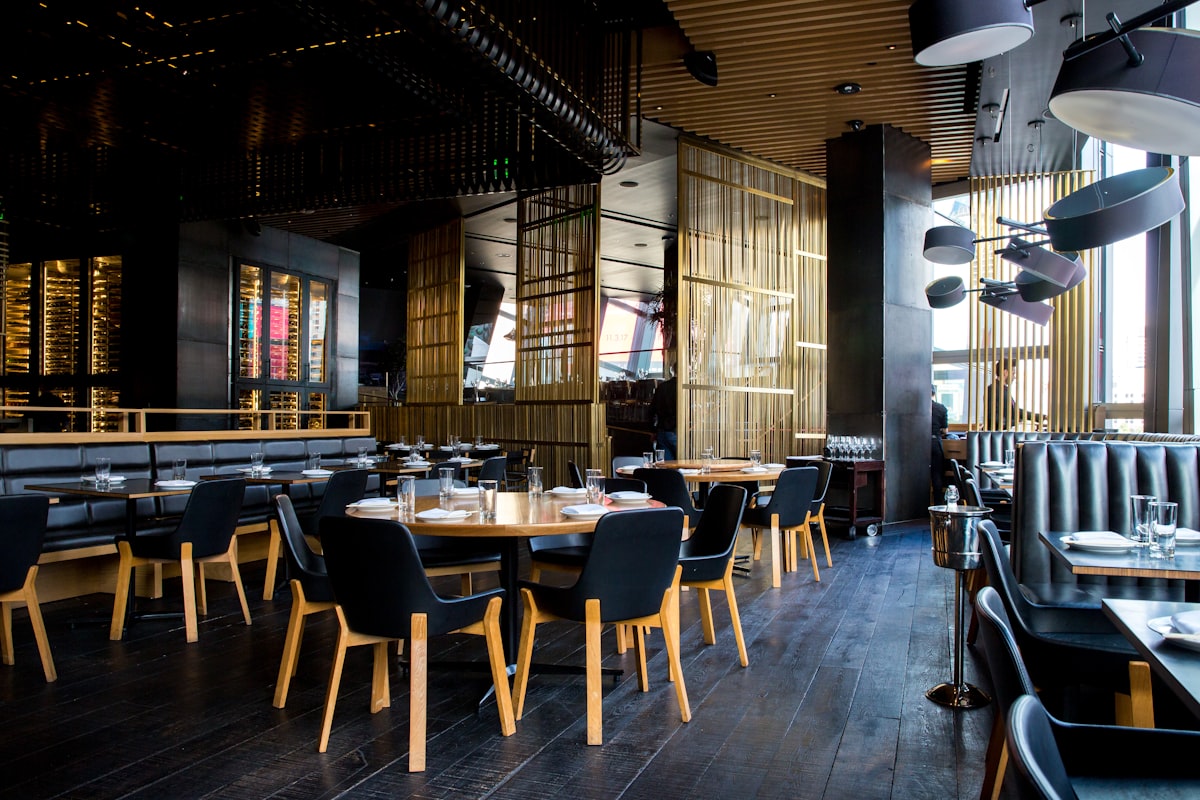
Guests don't read a menu the way you wrote it. They skim, compare a few prices against each other, and settle on something that feels fair for the occasion. The digits themselves matter less than the context around them: what sits next to a price, how it is written, and whether the bill at the end matches what the menu led them to expect.
A lot of menu psychology advice online is recycled from American chain restaurants and does not travel well. This article goes through the common tactics one at a time, says when each tends to work and when it backfires, with particular attention to Egyptian diners and the tourists who eat in Sharm, Hurghada and downtown Cairo. It ends with a way to test any of it on your own menu, because your guests are the only evidence that counts.
1What guests actually compare
Almost nobody judges a price in isolation. A guest looking at a EGP 320 mixed grill is comparing it to three things: the other mains on your menu, what they paid last time they came, and what a similar dish costs at the place they almost went to instead. That gives you three levers:
- The neighbours on the page. This is what anchors and decoys work on, and it is the lever you control completely.
- Memory of your old prices. Regulars notice changes on the items they always order. They rarely notice changes on items they never order.
- The outside market. Commodity items (a can of soda, bottled water, a plain espresso) are compared against the supermarket and the café next door. Your signature dishes are not, because there is no direct comparison.
The practical consequence: spend your price increases where comparison is weakest, and keep the items guests can easily price-check close to market.
2Charm prices vs round prices
Charm pricing means ending a price just under a round number: 149 instead of 150, 95 instead of 100. The idea is that the eye reads the first digit and the dish feels cheaper. Round prices signal the opposite: confidence, quality, no haggling.
Where charm pricing backfires in Egypt
Small change is often short at the till. A bill of EGP 149 paid in cash invites either a hunt for a single pound, a staff member quietly rounding up, or a guest who feels short-changed. None of that helps you. Most cash-heavy places are better off pricing in steps of 5 or 10 pounds.
Charm endings also clash with the positioning of a quiet, upscale dining room. A EGP 1,199 tasting menu reads like a discount store. Keep charm-style endings, if you use them at all, for value-led concepts such as fast food combos and delivery bundles, where a sharp-looking price is part of the pitch.
| Concept | Suggested price ending | Why |
|---|---|---|
| Koshary, ful, sandwiches, QSR | Round to 5 (e.g. 45, 85) | Fast cash payments, easy change |
| Casual dining, cafés | Round to 5 or 10 | Clean, easy to total a table in your head |
| Fine dining, hotel restaurants | Round to 10 or 50 | Signals confidence, no discount feel |
| Delivery combos and promotions | Charm endings can work | Price is paid by card or app, and "deal" framing is the point |
3Dropping the currency sign
A widely cited 2009 experiment from Cornell's hotel school found that guests shown prices as bare numerals spent more on average than guests shown prices with a dollar sign or the word "dollars". It was a single restaurant in the United States, so treat it as a reason to test, not as a guaranteed effect.
In Egypt there is a complication the Cornell study never had to deal with: many of your guests may not be sure which currency they are looking at. A tourist in Hurghada seeing "450" could wonder whether that is pounds, dollars or euros, and the moment of doubt does more damage than any currency sign.
The workable compromise:
- Remove "EGP", "LE" or "ج.م" from every individual line.
- State the currency once, clearly, at the top of the menu or each category: "All prices in Egyptian pounds".
- If most of your guests are tourists, keep that note in every language the menu runs in, not just English.
Pick one numeral system
Arabic menus sometimes use Eastern Arabic digits (٤٥٠) while the English side uses Western digits (450). Tourists cannot read the first, and a bilingual menu that mixes both on one line looks messy. Many bilingual menus use Western digits on both sides, since most local guests read them without effort. Whatever you choose, be consistent across the whole menu.
4Anchors: the expensive dish that sells the others
An anchor is a high-priced item that makes everything near it look reasonable. A EGP 1,800 mixed grill platter for four, placed at the top of the grills section, makes a EGP 420 kofta plate feel like a sensible choice rather than a splurge.
Anchors only work under two conditions. First, the item must be real and orderable; a fake anchor that the kitchen groans about when someone orders it is a liability. Second, it has to be plausible for your guests. A family grill platter anchors well in a Friday lunch spot, while a gold-leaf steak at a neighbourhood café just looks silly.
Pro Tip
The best anchors are group items: platters, sharing boxes, a whole fish by weight with a clear "usually serves 2 to 3" note. They carry a high number without looking greedy, and they sell on Ramadan iftars, birthdays and big family tables.
5Decoys and size ladders
A decoy is an option that exists mainly to make another option look better. The most common version on a menu is the size ladder:
| Fresh juice | Illustrative price (EGP) | Effect |
|---|---|---|
| Small | 60 | Feels mean for a sit-down meal |
| Medium | 85 | The decoy: only 10 pounds less than large |
| Large | 95 | Looks like the obvious deal |
If the large has the best margin in pounds (it usually does, because the cup and labour barely change), this ladder steers guests toward it. On a digital menu, show sizes as options inside one item rather than three separate lines, so the comparison happens in one place. Our guide to menu modifiers, sizes and add-ons covers how to set that up.
Decoys backfire when guests can see the trick. If the medium is obviously pointless, regulars start to feel managed. Keep the gaps believable.
6What reliably backfires with Egyptian diners
Some pricing choices save a few pounds on paper and cost you far more in reviews and lost regulars.
- The surprise at the bottom of the bill. If menu prices exclude service and VAT, the total can land noticeably above what the guest added up in their head. A clear line at the top of the menu ("prices exclude service and VAT") is the minimum. Many places now show VAT-inclusive prices so the menu and the bill agree. Check current consumer-protection rules for how prices must be displayed.
- A separate, pricier English menu. Tourists compare notes, and a review saying "the Arabic menu was cheaper" is very hard to recover from. One menu, two languages, the same numbers.
- "Market price" with no guidance. Fish and seafood sold by weight need a price per kilo and a typical portion weight, or guests fear the bill and order something cheaper.
- Visible, frequent price corrections. Stickers over old prices, or a waiter explaining "that price changed", make guests wonder what else changed. On a digital menu, update the price and it is simply correct.
- Minimum charges you only mention at the end. Cafés with a per-person minimum should state it on the menu, not on the bill.
Hiding prices on premium items to "let the food speak".
→ Unpriced items make guests assume the worst and order around them. Show every price; use description and placement to make the expensive dishes feel worth it.
7How to test a tactic on your own menu
None of this is a law. It is a set of hypotheses about your guests, and a digital menu makes them cheap to test.
- Change one thing. Remove currency signs, or add an anchor to one section, or reshape one size ladder. Never all three at once.
- Pick a clean period. Four normal weeks before and four after. Avoid Ramadan, Eid and school holidays, when demand shifts for reasons unrelated to your menu.
- Measure the right number. Average spend per guest, or the share of juices sold as large, not total sales, which moves with footfall.
- Write down what you expect first. It stops you rationalising a flat result.
Any POS item report gives you the data. With Menyo, a price or layout change on the menu goes live immediately, and on the Professional plan the sales reports compare periods and show average order value, so before-and-after checks take minutes. For the harder part of pricing, the costs underneath, see how to price menu items for profit. Descriptions matter as much as numbers, and writing item descriptions that sell is the natural next step.
8Frequently asked questions
Does removing the currency sign really increase spending?
There is some evidence it can, from a well-known US restaurant experiment, but no guarantee it applies to your guests. It is cheap to try on a digital menu. Just make sure the currency is stated once clearly, especially if you serve tourists.
Should I use 99 or 95 endings on my menu?
For dine-in in Egypt, usually not. Cash payments and scarce small change make odd endings awkward, and they cheapen an upscale menu. They can suit delivery bundles and value combos paid by card or app.
Is it better to list prices with or without VAT?
Costing should always be done on the net price, but for display, VAT-inclusive prices remove the bill-shock problem. If you show prices before VAT and service, say so at the top of the menu in every language, and check what current rules require.
Where should the most expensive item go on the menu?
At or near the top of its own section, where it frames the dishes below it. It should be a real item the kitchen is happy to cook, ideally a sharing or group dish.
9The short version
Price psychology works at the margins, and only when the basics are honest: clear currency, no surprises on the bill, one set of prices for everyone. Get those right, use anchors and size ladders where they fit your concept, and test one change at a time.
If you want a menu where testing a price layout means editing a field instead of reprinting, try Menyo. Plans start at $19 a month with a short free trial.
Ready to digitize your menu?
Create a beautiful QR menu from a photo in minutes—the AI scan takes about 60 seconds. AI extracts items and prices automatically.
Try Menyo Free